
What is the difference between wet-bulb temperature and dry-bulb temperature?
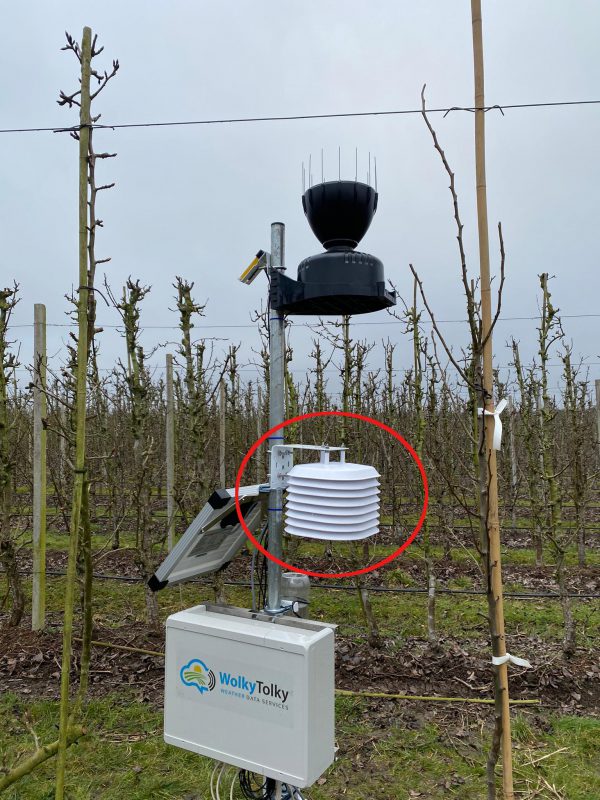
Measuring dry-bulb temperature in a ventilated weather shelter
We are often asked what the difference is between the wet-bulb temperature and the dry-bulb temperature. And on which temperature sensor does a WolkyTolky frost alarm work?
What is the dry-bulb temperature?
The dry-bulb temperature is the normal air temperature. However, to make a clear distinction, this temperature is often referred to as the dry-bulb temperature in combination with a wet-bulb temperature.
At WolkyTolky, we measure this temperature in a ventilated weather shelter. This shields your sensor from direct sunlight. Because fresh air can flow through the shield, you measure the actual air temperature (i.e., the dry-bulb temperature).
What is the wet-bulb temperature?
The wet-bulb temperature is the lowest possible temperature that the air has if you let water evaporate into it until the air is saturated (100% relative humidity).
If the air is dry, more water can evaporate and the wet-bulb temperature will be lower. The greater the difference between the dry-bulb temperature (or the normal temperature) and the wet-bulb temperature, the drier the air is and the more water can evaporate.
How do we measure the wet-bulb temperature?
We measure the wet-bulb temperature with a thermometer equipped with a wet sleeve around the sensor. Heat is required to evaporate the water from the sleeve. This heat is extracted from the sensor, causing it to cool down. The thermometer with the wet bulb then indicates a lower temperature than the thermometer with the dry bulb.
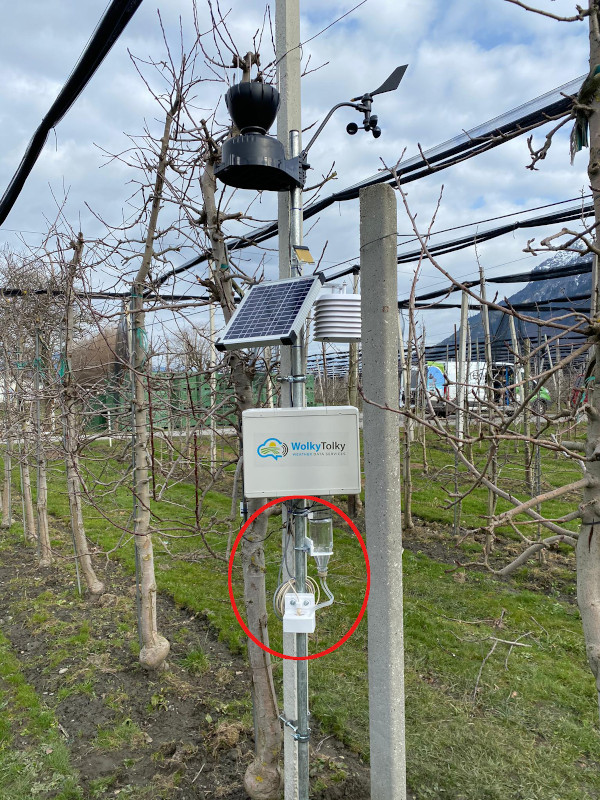
Measuring wet-bulb temperature
Why is the wet-bulb temperature important in fruit cultivation?
A similar process takes place in the crop. Heat is extracted from the crop, which can cause it to freeze before the air temperature (dry-bulb temperature) drops below zero.
In situations with high humidity, the wet-bulb temperature can be compared to the temperature of the flower bud, where evaporation also takes place. In humid air, air temperature, wet-bulb temperature, and crop temperature are close to each other.
However, when the humidity is low, the release of heat to the dry air is high, which means that the crop temperature can even be lower than (the already lower) wet-bulb temperature.
That is why we always have the frost alarm on a wet-bulb temperature sensor, so that a grower can be warned as early as possible. Of course, a grower can set at which wet-bulb temperature he wants to receive an alarm. Up to 5 telephone numbers can then be called so that action can be taken quickly.
Are you also interested in a frost alarm based on wet-bulb temperature? View our products and request a free quote.